Antipodean59's Blog

Restored New Testament Christianity

Archive for the tag “Jesus”

Thought For The Week

I thought I would add a new segment for to end the week with, called “Thought For The Week.”

LAW OF MOSES NOT IN EFFECT TODAY.

“For the promise that he would be the heir of the world was not to Abraham or to his seed through the law, but through the righteousness of faith. For if those who are of the law are heirs, faith is made void and the promise made of no effect, because other law brings about wrath; for where there is no law there is no transgression” Rom.4:11-15.

People need to understand that the Law, as handed to Moses in Exodus, cannot logically be in effect today, for if it were it would contradict the passage above. Paul said it was “nailed to the cross” Col.2:14 meaning it is dead and no longer in effect.

May God bless you as you travel and study through His word.
Graham

The truth; i.e., God’s word will set you free from sin


A preacher back in 1958 had the following to say about the truth of God’s word that changeth not over the years in much the same manner as God Who declares: “Every good thing bestowed and every perfect gift is from above, coming down from the Father of lights, with whom there is no variation, or shifting shadow. [This in order that] In the exercise of His will He brought us [that is those who have obeyed his word] forth by the word of truth, so that we might be, as it were, the first fruits among His creatures” (James 1:17-18).

Let us sit back and hear what Melvin Vaughan had to say all those years ago.
Of all those things which are important and essential to man’s spiritual welfare, there is no single item that can affect him more significantly than his attitude toward the truth.
The truth, in a special sense, was made known by the coming of the Lord: “For the law was given by Moses, but grace and truth came by Jesus Christ (John 1:17). It is not surprising that the Lord had so much to say about the truth and what it can do for men. The Lord pointed out that the truth leads men to the freedom most needed: “Then said Jesus to those Jews which believed on him, if ye continue in my word, then are ye my disciples indeed; and ye shall know the truth, and the truth shall make you free” (John 8: 31,32). The truth revealed and applied is the means by which God “sanctified” or sets man aside in His service as the Lord indicated in His prayer: “Sanctify them through thy truth, thy word is truth”3 (John 17:17). So important is the truth to men that the major function of the Comforter or Holy Spirit was to remind the disciples of the truth Jesus had taught them during his ministry (John 14: 26), and to guide the apostles “. . . into all truth” (John 16:13).

The Truth Shall Make You Free

( Melvin L. Vaughan – 1958)

Those to whom the Holy Spirit was sent emphasised the importance of truth. James writes of the “word of truth” as the means by which his readers had been “begotten of God” (James 1:18). Paul reminded the Ephesians that the salvation they enjoyed was the end result of their response to the truth delivered to them (Eph.1:13). Peter points to the truth as the means by which man becomes justified before God: “Seeing ye have purified your souls in obeying the truth through the Spirit unto the unfeigned love of the brethren see that ye love one another with a pure heart fervently: being born again not of corruptible seed, but of incorruptible, by the word of God, which liveth and abideth forever” (1 Pet. 22, 23).

Even though the importance of the truth has been emphasized and its source clearly identified with the will of God; it has been denied, ignored, ridiculed, and misrepresented by men. Those who have sought to uphold the truth have been persecuted, oppressed and even put to death because of their devotion to the truth which they held to be unalterable.
The word of God renders to man an invaluable service by pointing out to him the truth with regard to his state, the limitations of his ability, his great need, and the solution to that need. Paul in examining the spiritual state of the people apart from Christ concluded that “all have sinned and come short of the glory of God” (Rom. 3:23). Sin is identified in the Bible as including both the “transgression” of God’s law (1 John 3:4), and the failure or refusal to fulfil a known duty to God: “To him that knoweth to do good and doeth it not, to him it is sin” (James 4:17).

To recognise the fact of sin and its existence, even in one’s self, is of little significance until it is known that sin is the barrier that separates man from God. “Behold,” the prophet has written, “The Lord’s hand is not shortened that it cannot save, neither his ear heavy that he cannot hear; but your iniquities have separated between you and your God and your sins have hid his face from you that he will not hear” (Isa. 59:1,2).
Here is the truth about man’s state and need. He becomes guilty of sin because he has violated Divine law. Because he is guilty of sin he is alienated from God and should he die in this condition he is forever and eternally excluded from the joys of heaven. A disagreeable picture, to be sure. and unfortunate indeed is the person whose knowledge of the truth goes no further than this!

Man does not have within himself the means or knowledge by which he can free himself from these sins and become reconciled to God. Jeremiah had long since reminded Israel of this: “The way of man is not in himself, it is not in man that walketh to direct his own steps” (Jer.10: 29). To provide the means, God sent His Son to be the propitiation for the sins of the world; to provide the guidance, the Son brought the truth. In the Son is revealed the truth by which alone it is possible to have access to God: “I am the way, the truth, and the life: no man cometh unto the Father but by me” (John 14:6).

Jesus had said: “. . . if ye continue in my word . . . ye shall know the truth and the truth shall make you free” (John 8:32). The truth does provide freedom from ignorance by making both knowledge and understanding available: “The entrance of thy word giveth light, it giveth understanding to the simple” (Psalm 119:130). The truth provides freedom from uncertainty by making the pathway visible: “Thy word is a lamp unto my feet, and a light unto my pathway.” (Psalm 119:105.) The truth makes known the possibility of attaining freedom from sin by showing how the barrier between man and God can be removed: “. . . if ye continue in my word . . . ye shall know the truth and the truth shall make you free” (John 8:31,32). The truth provides this freedom from sin in reality as man obeys the truth: “Seeing ye have purified your souls in obedience to the truth . . .” (1 Pet. 1:22, 23).

The good news of freedom from sin through the sacrifice of Christ and obedience to the truth is called “the gospel” (1 Cor.15:1-4).

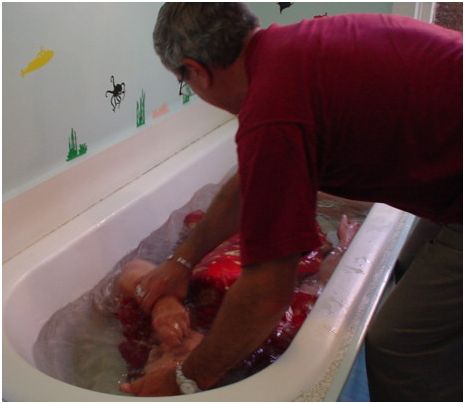
For the truth to become to you what it can, and what the Lord desires it to become, it must be sought in the words of the Lord and His apostles (John 8: 31,32). This truth must be approached reverently, respectfully, and open-mindedly that it might produce faith. (Rom. 10: 17; 2 Thess.2:10-12). The response of which a believer involves the turning from sin and error to truth and righteousness inspired by gratitude for His mercy and the desire to please him (Rom.2: 4). The removal of the guilt resulting from sin is to be found where the Lord placed it in His death where His blood was shed. According to the truth the penitent believer is “baptized into his death” (Rom.6:3,4), “for the remission of sins” (Acts 2:38). It is here that he is made “free from sin” (Rom.6:18), has his sins “washed away” (Acts 22:16), enters Christ (Gal.3:27), and becomes a “new creature” (2 Cor.5:17).
The church, which is composed of the saved (Acts 2:47), is to be the “pillar and ground of the truth” (1 Tim.3:15). The ‘disciple indeed” is to “let his light so shine before men that others may see his good works and glorify his Father which is in heaven” (Matt. 5:13-16). The teacher must uphold the truth at all times in its purity and fullness as revealed by the Lord (2 Tim.2: 2; Jude 3).

Love and devotion to the truth leads the new creature to walk in the steps of him who “. . . left us an example. . . .” That he might “draw near with full assurance of faith having his heart sprinkled from an evil conscience and his body washed with pure water” (Heb.10:22).
“Then said Jesus to those Jews which believed in Him: If ye continue in my word then are ye my disciples indeed and ye shall know the truth, and the truth shall make you free” (John 8: 31,32).

  • Will you recognise according to God’s standard that you are caught up in sin and need to rectify it?
  • Will you follow the steps provided by the unchangeable word that leads to freedom from sin?
  • Will you enter the church that is Christ’s body where the truth that sets you free is a “pillar and ground”?
  • If you are willing to follow, let it be known to Christ’s church that gathers in your neighborhood or reply to this post and let “us reason together” (Isaiah 1:18).

The onus is on you to prove it

The apostle Paul said to make sure that one “Prove all things” (I Thessalonians 5:21). Just because something is widely accepted as being true and is therefore the supposed starting point i.e., an axiom, doesn’t prove anything. If it is true then you are under obligation to “prove” it.

The apostle Peter told the 1st Century church to do as much regarding their faith. He said they were obligated to give a “reason” for their “hope” (I Peter 3:15).  For instance the axiom “God is love” needs to be proven with valid reasoning if it is to be convincing. After all faith in such, according to Paul, can only come about by hearing God’s word (Romans 1:17; 10:17) which implies a reasoning mind.

The axiom that is widely accepted as being true is that of organic evolution. That is life somehow started from a single cell and grew to the complexity of life we see before us today.  If that be true then the adherent must prove it to be so.

Here is an excellent article that might help to explain why I say such and help you as well (that is, of course, if you have the willingness of mind to indulge:)

Graham

So much for religious freedom in the UK

The following information you might find unsurprising if the story emanated from, say, Saudi Arabia, Iran or Afghanistan but no this comes from the UK.

Police invoke public disorder act to shut down Bible verses 

Importance of Pentecost

The day of Pentecost as referenced in Acts 2 was a result of fifty days from the Passover Sabbath (πεντηκοστή pentēkostē fiftieth from Passover, Strong’s Dict.). This day was counted from “the morrow of the Sabbath” (Lev.23:15) when the omer of barley harvest i.e. “wave sheaf” was first cut.  The count of these weeks was to start the day the sickle cut that first wave offering (Dt.16:9). This barley harvest was to be over and done within 7 weeks i.e. 49 days from which the “Feast of Ingathering” (Ex.23:16) or “Day of First Fruits” (Num.28:26) as they were known under the Old Testament could begin. This day of Pentecost marked the beginning of the wheat harvest, hence the term “first fruits”.  It is no coincidence, in my humble opinion, that the two different corns represent the Old (i.e., barley) and the New Testaments (i.e., wheat) [any crop farmer will attest barley always precedes wheat in harvest times].


A simple count of 49 days beginning “the morrow of the Sabbath” will, without exception, bring one to the first day of the week that we call Sunday.  This day marked the beginning of the church, of which there is, without exception, only one (Eph.4:4).


It goes without saying this church needed entry conditions explained i.e. the plan of salvation given by Peter upon request of those who crucified Jesus (Acts 2:37—41).  In addition, this church was instructed via the “apostle’s doctrine” regarding fellowship and worship (Acts 2:42-47). It is important to note that the “breaking of bread” in verse 42 differs from “breaking bread from house to house” found in verse 46. The former concerns the immediate context with the Lord’s Supper memorial for “the breaking” is tn klasis i.e. the fracture, the specific act of breaking the specific bread [the Greek places the definite article tn before breaking and tov before bread indicating specificity] that Adam Clarke points out: “Breaking of bread was that act which preceded a feast or meal, and which was performed by the master of the house, when he pronounced the blessing – what we would call grace before meat”. The word is employed by Matthew in chapter 26:26 where Jesus, the Master, “took the bread, blessed it and broke [klasis] it” because it represented His body upon the soon to be realised cross, a solemn and shameful (Gal.3:13) event.  This in contrast with the latter “break” is klaō i.e. to generically break which the immediate context of the remainder of the verse says “they ate their food with gladness and simplicity of heart”. They were simply breaking the food apart to eat it with gladness of fellowship together with people of common salvation.


This having been said indicates the absolute importance of the first day of the week for the church to assemble for authorised worship and fellowship.

Graham

Refuting those who say Jesus will return to reign on Earth

Many who subscribe to the unscriptural position that Jesus is coming back to earth and will reign on the throne of David in Jerusalem will surely be disappointed according to this outline.

The fact is, the Bible is mans only guide to matters concerning the Kingdom of God and it clearly implies the premillennial doctrine is fantasy.

Graham

Before you cross your Rubicon

To cross the Rubicon is a metaphor meaning to deliberately go beyond the point of no return.

An interesting article that may open your eyes can be read here

Think about the consequences before you leap!

Graham

Be prepared or you will suffer

Degrees of Punishment

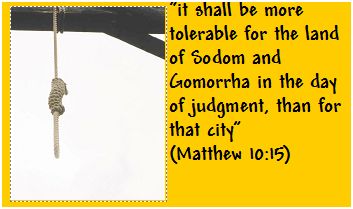
“But I say unto you, It shall be more tolerable for Tyre and Sidon at the day of judgment, than for you.” (Matthew 11:22)

The subject of eternal hell is so repugnant to the modern ungodly world that people desperately search for some scientific rationale to justify their rejection of God’s Word. Charles Darwin was an example. He became an apostate from Christianity, not because of his scientific “discovery” of natural selection, but because of Christ’s teachings that unbelievers (including his own father) would end up in hell.

Nevertheless “the fearful, and unbelieving . . . and idolaters, and all liars, shall have their part in the lake which burneth with fire and brimstone: which is the second death” (Revelation 21:8). These are words from God Himself!

But is there no difference in the punishment of, say, blaspheming and wicked unbelievers and the mere careless unbeliever? Yes, there is. As Christ said, the idolatrous inhabitants of Tyre would have repented if they had seen His mighty works, but the Galileans of Chorazin and Bethsaida who had seen His miracles and heard Him preach had not. Consequently they will suffer more.

Similarly, He said concerning those who would reject the gospel preaching of His disciples that “it shall be more tolerable for the land of Sodom and Gomorrha in the day of judgment, than for that city” (Matthew 10:15). The wicked populace of Sodom, “giving themselves over to fornication, and going after strange flesh,” will suffer “the vengeance of eternal fire” (Jude 7), but even greater punishment awaits those who willfully reject God’s love in Christ.

There will, indeed, be degrees of punishment in hell, but they will be determined largely in proportion to degrees of “light” rejected. This is an unwanted–but urgently needed–message in these last days!

By Henry Morris (Institute of Creation Research)


If Baptism Is Not a Condition of Salvation, Will You Answer These Questions?

Then Peter said unto them, Repent, and be baptized every one of you in the name of Jesus Christ for the remission of sins, and ye shall receive the gift of the Holy Ghost (Acts 2:38).

1.If baptism is not a condition of salvation, why did Peter mention baptism since he was answering the question of what to do to be saved? (2:37).

2. If baptism comes after salvation, would not repentance also follow salvation, since they are joined by the conjunction and?

3. Is not repentance and baptism in this verse both for the same purpose?

4. If salvation comes before baptism, why does Peter say it is “for the remission of sins”?

5. If the phrase, “for the remission of sins” in Acts 2:38 means because of remission, would not the same phrase in Matthew 26:28 mean because of remission of sins?

6. Did Jesus shed His blood because men were already saved?

7. If Christ did not shed His blood because men were already saved, would it not follow that men are not baptized because they were already saved? The phrase in Matthew 26:28 and Acts 2:38 are identical in both the Greek and English.

8. Would it not be a false doctrine to teach that Christ shed His blood because men were already saved?

9. Likewise, is it not a false doctrine to teach that men are baptized, because they are already saved?

10. If the people on Pentecost were saved before they were baptized, why were they not added to the church until they were baptized, since such as should be saved were added to the church? (2:47).

11. The word church means “the called out” and only those baptized were added to the church. If one is saved before he is baptized, would he be saved before he is called out of the world?

12. Is salvation in the world or in Christ? (2 Tim. 2:10). “Then they that gladly received his word were baptized: and the same day there were added unto them about three thousand souls” (Acts 2:41). “He that rejecteth me, and receiveth not my words, hath one that judgeth him: the word that I have spoken, the same shall judge him in the last day” (John 12:48). “Then cometh the devil, and taketh away the word out of their hearts, lest they should believe and be saved” (Luke 8:12).

1. Can one be saved and not receive the Word?

2. All who received the Word on Pentecost were baptized.

3. Were there any on Pentecost who were saved that did not receive the Word?

4. Does the Word say baptized for the remission of sins or baptized because of remission of sins?

5. How is it possible for one to be baptized as the Word teaches, and not be baptized for the remission of sins?

6. If you were not baptized for the remission of sins, you were not baptized as the Word teaches and therefore were not saved.

7. If not, why not?

Franklin Camp, Deceased


Appointment Time

The appointment that all men will keep regardless of their status in this world is to die.  “And as it is appointed unto men once to die, but after this the judgement” (Hebrews 9:27).  In fact, DNA research has recently uncovered 300 defective genes that will guarantee a breakdown of the DNA strand leading to death. As Richard Durbin, of Wellcome Trust Sanger Institute says, “…none of our genomes is perfect”.  The God of heaven and the Bible sure knew what He was meaning when He said, “…by one man sin entered into the world, and death by sin; and so death passed upon all men, for that all have sinned” (Romans 5:12).

The question is, are you ready for the judgement?  Have you received or rejected the word of Christ? (John 12:48)  Will you pass or fail the upcoming examination? (II Corinthians 13:5).  Is Jesus going to welcome you into heaven as a servant with the words “Well done” or “Depart from Me” to Hell wicked one?(Matthew 25:21, 23; 7:23).

There is only one way in which to find out for you will only be welcomed into heaven if you have done the “will of [God] which is in heaven” (Matthew 7:21).  There is only one will of God and that is Jesus Christ’s word (John 14:6).  There is only one that can save you, the Man, Christ Jesus (Acts 4:12).  It is no use appealing to the doctrines and traditions of men such as Protestant churches, Roman Catholic church, Holiness movements, Mormon, Jehovah’s Witness, Seventh Day Adventists cults and such like, for Jesus described such man-made ideology is “vain” (Matthew 15:9).  Paul said such shenanigans are worthy of being labelled “accursed” (Galatians 1:6-9).

That can mean only one thing, you need to get with the programme and be “added” to the church (Acts 2:47).  You don’t know how?  Well, here’s a tip, check out the essential pattern Essential Pattern or click on the icons on the side of this post but make sure you hurry because you just don’t know when Jesus is going to return (Matthew 24:36).  It might be tomorrow for all you know and if He returns and you have not obeyed His word by becoming a Christian then you will end up in Hell along with all these poor souls (cf Ezekiel 32:18-32; Mathew 7:13).

Your appointment day is going to come maybe sooner than later, so what are you waiting for?  Now is good (II Corinthians 6:2).

Graham


Post Navigation